In 2013 I wrote about how I built my arcade cabinet with a Raspberry Pi and RetroPie. That was not the end of the project. Over the years the cabinet got new wiring, new art, new controllers, a new brain and a new screen. It even runs a game that I made myself. Here is what happened, in order.
2016: rewiring and a CRT
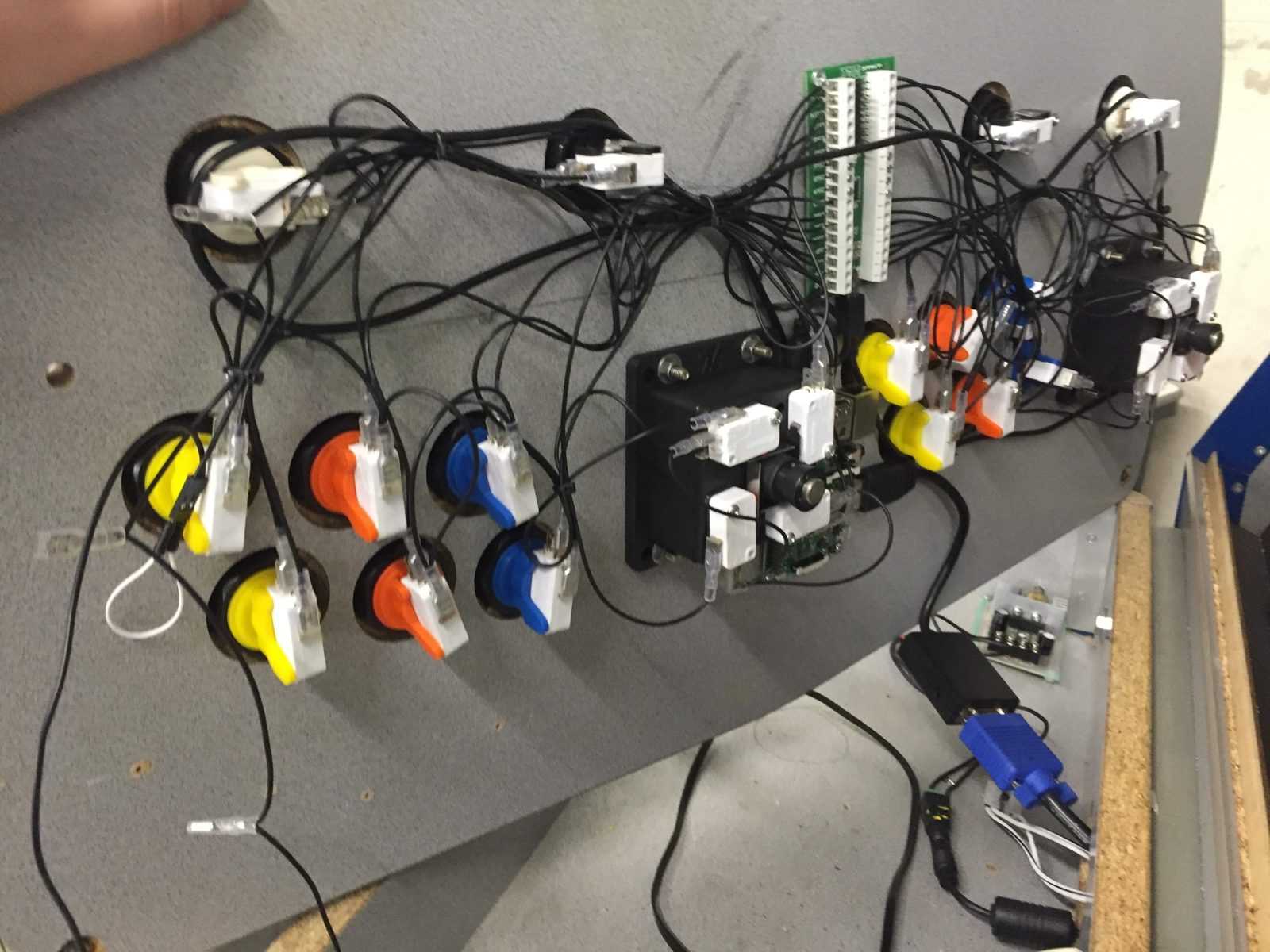
In 2016 I opened up the control panel and rewired everything. All buttons and both joysticks go to an interface board, and the Raspberry Pi sits right next to it. It is not pretty, but it works.
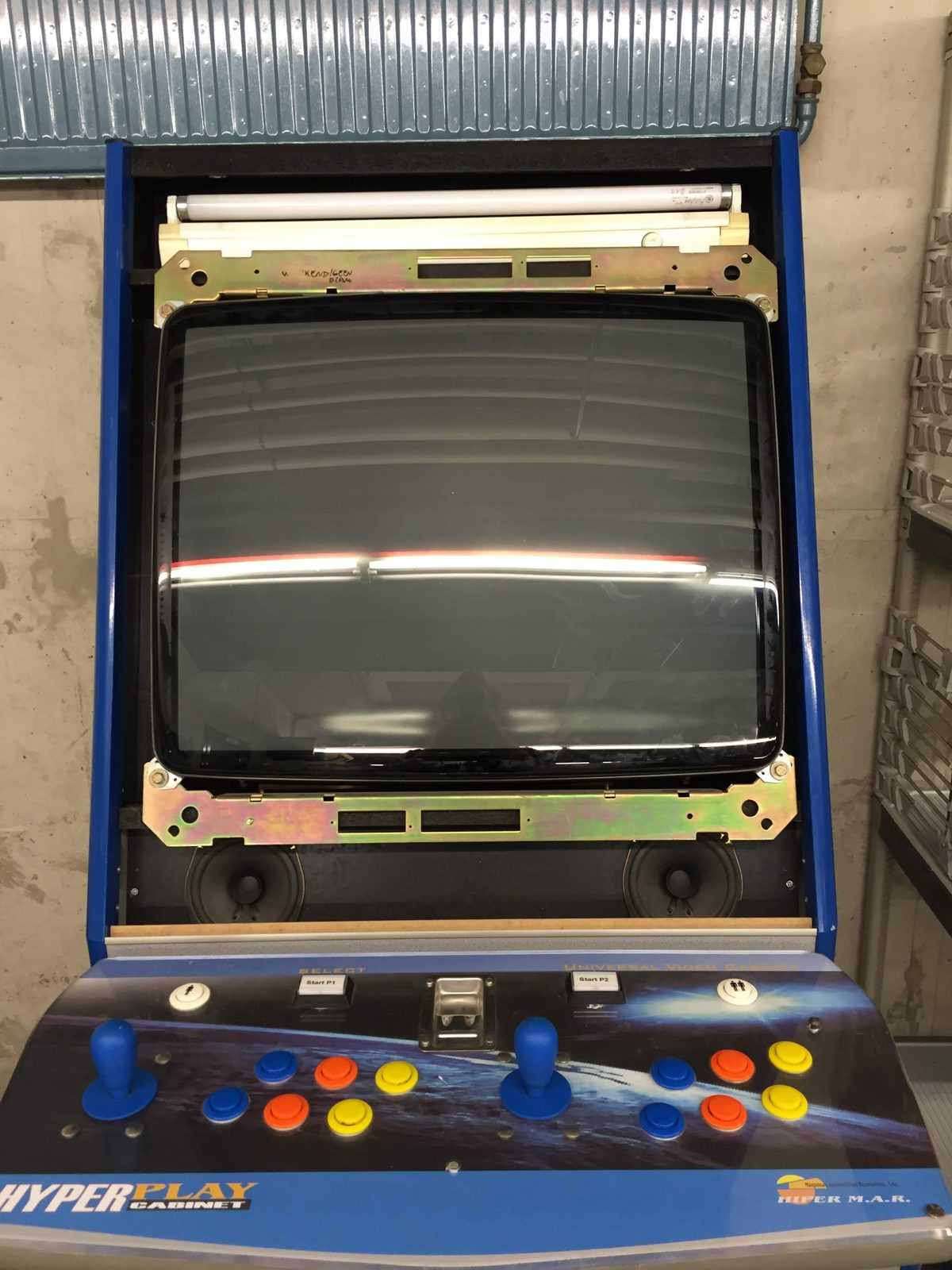
At that time the cabinet had a CRT (cathode ray tube) screen in the frame. Remember this photo, because the CRT story comes back later.
2019: measuring for custom decals
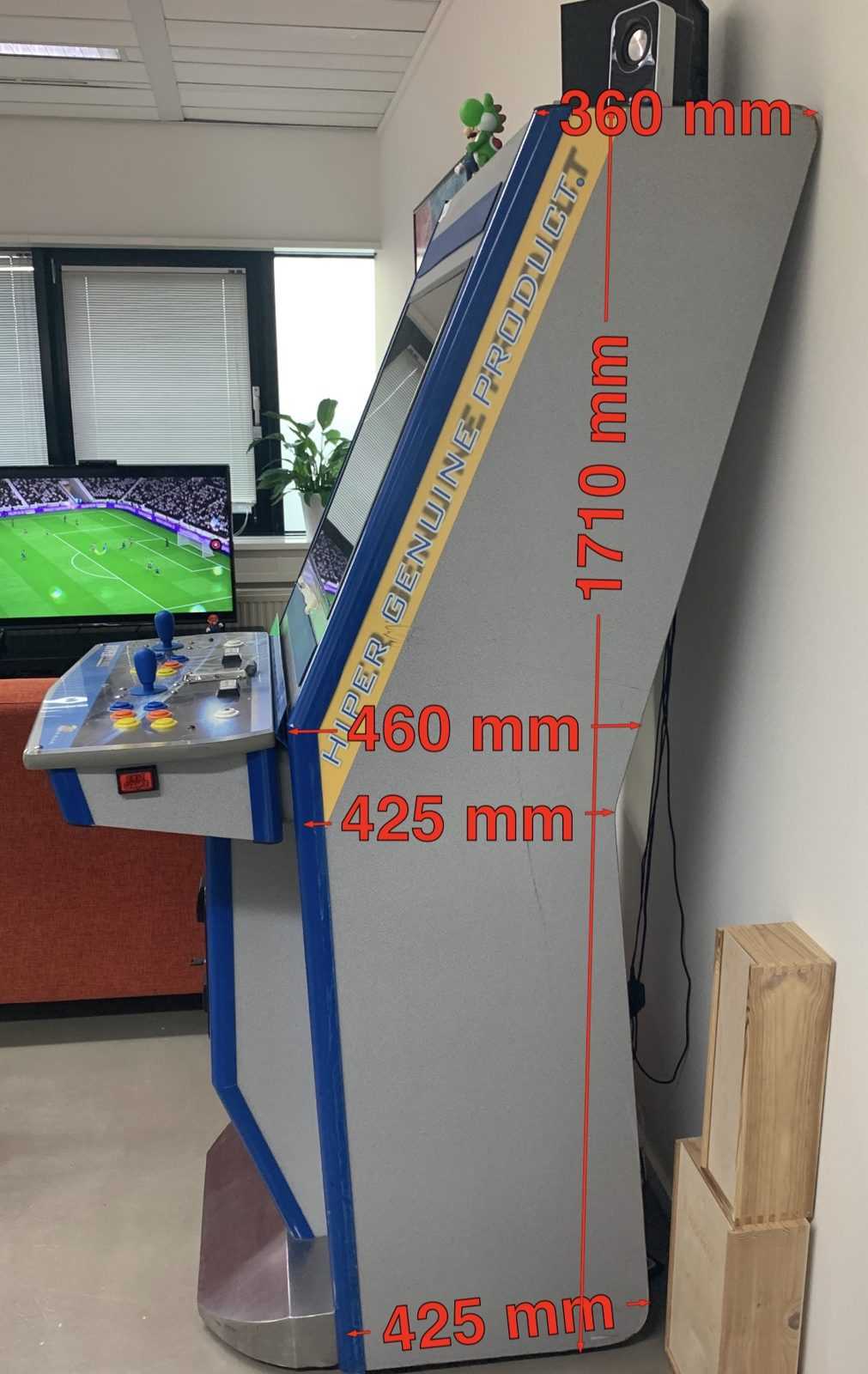
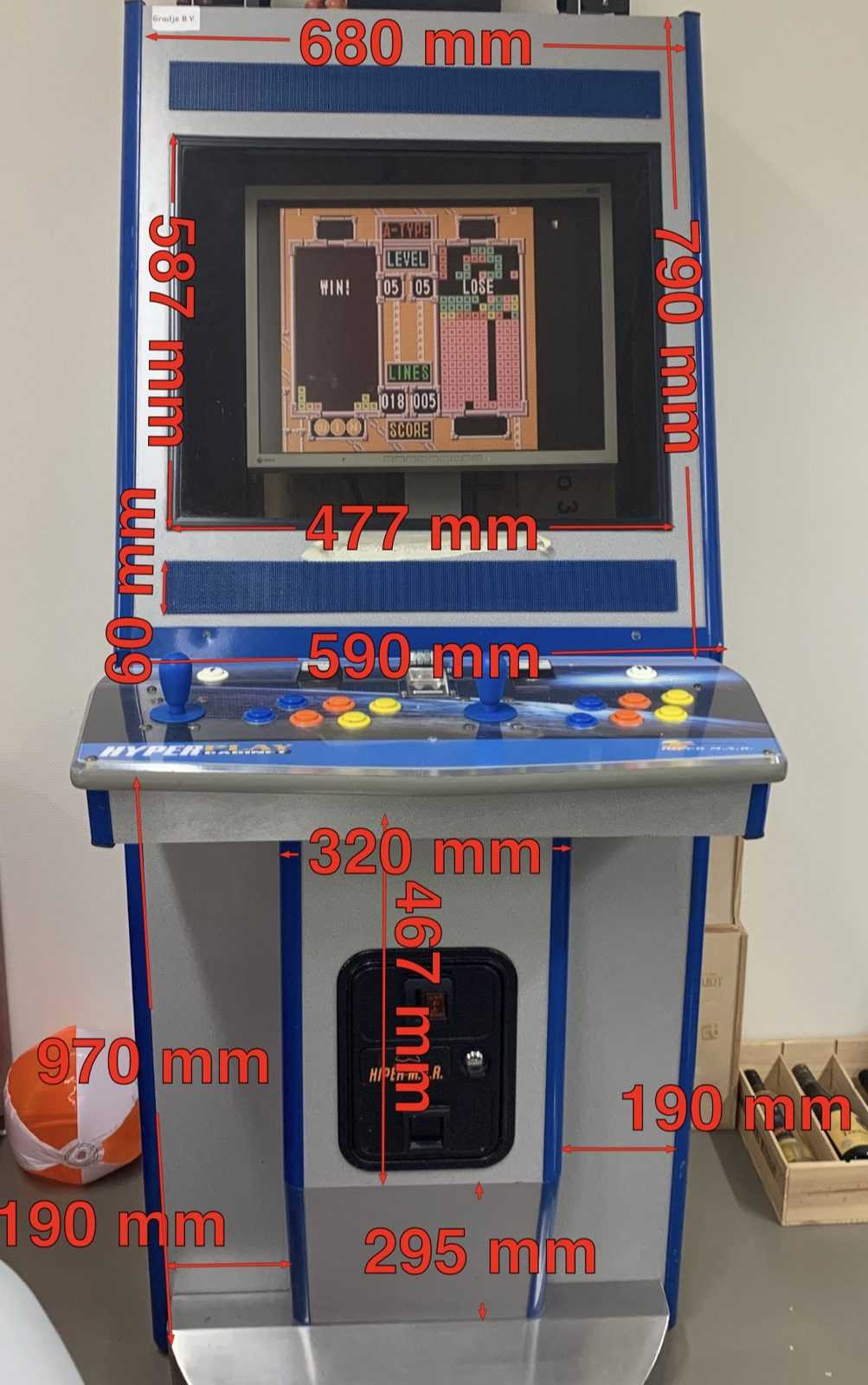
The original “Hyperplay” art was grey and blue and quite boring. I wanted custom decals, so I measured every part of the cabinet. That includes the side, the front, the bezel around the screen and the area around the coin door. With these numbers the printer made decals that fit this exact cabinet.
Early 2024: Nintendo on the left, SEGA on the right
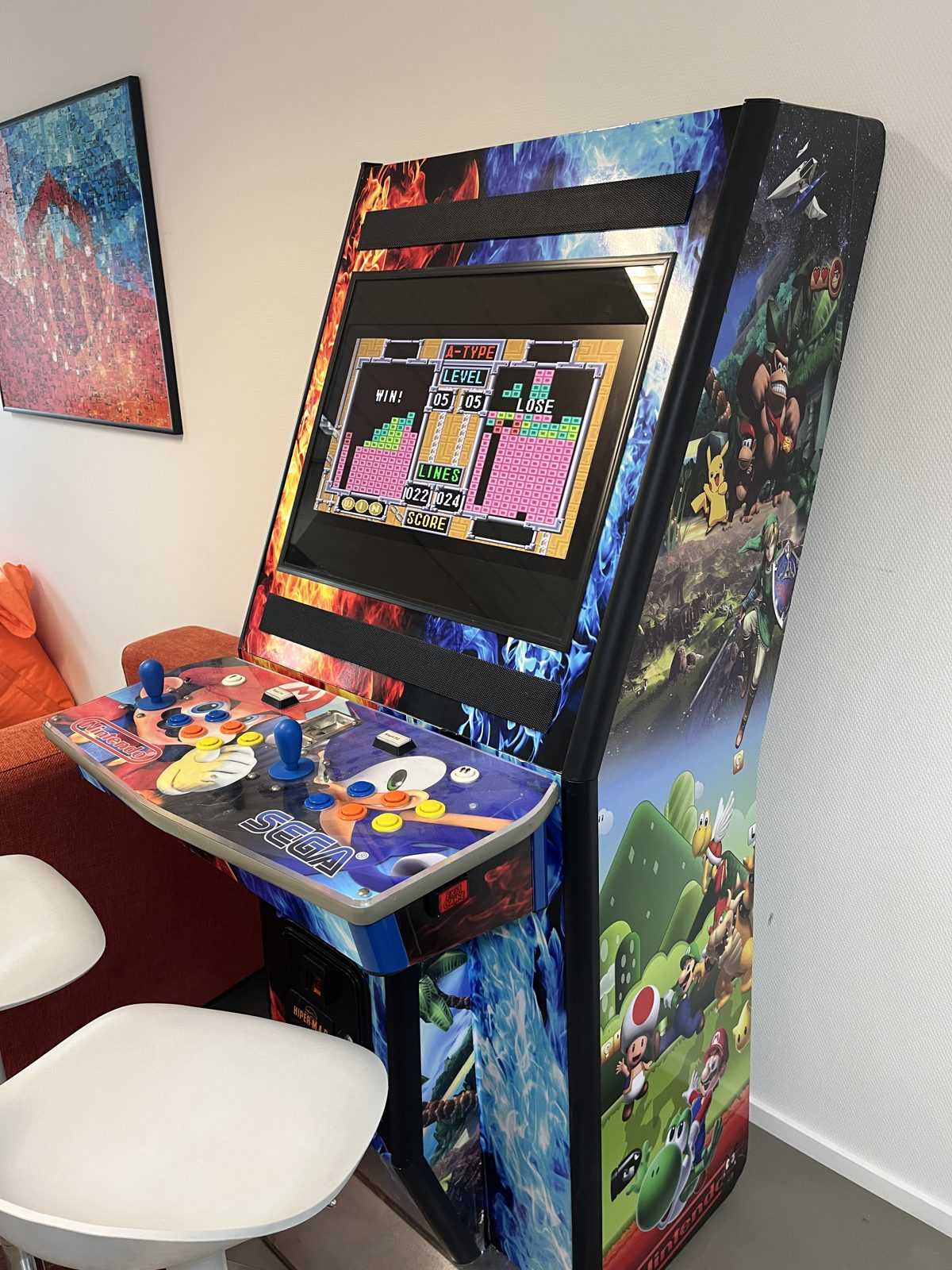
The decals went on in early 2024. The left side of the cabinet is all Nintendo: Mario, Yoshi, Link, Donkey Kong and Pikachu. The right side is SEGA. The front got red and blue flames, and the control panel shows Mario for player one and Sonic for player two. The old console war, in one cabinet.
Autumn 2024: from Raspberry Pi to Pandora’s Box
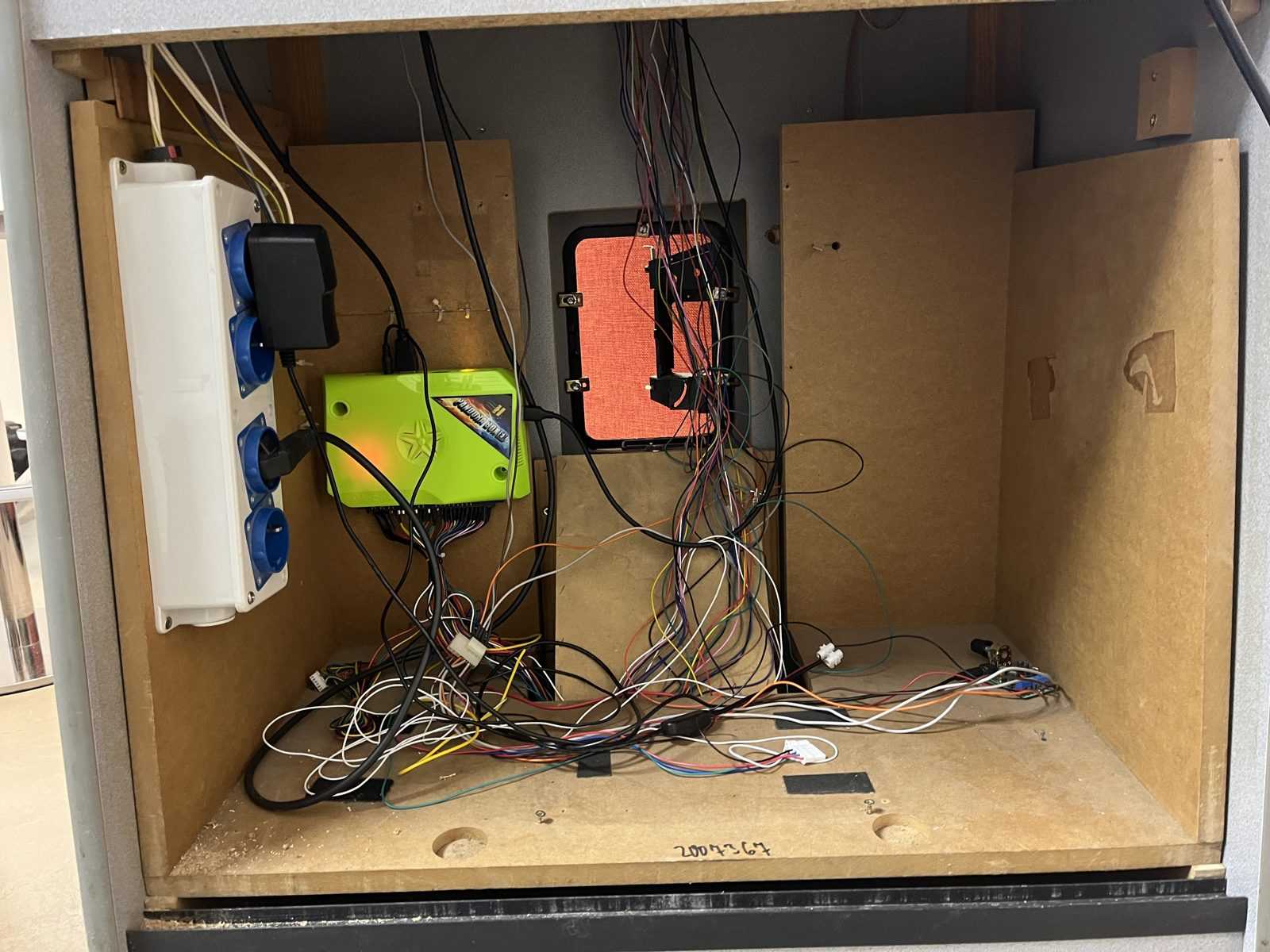
After more than ten years, the Raspberry Pi with RetroPie made way for a Pandora’s Box. This is a ready-made arcade board with thousands of games built in. You connect the buttons and joysticks directly to its wiring. The first one was a green box.
Autumn 2024: more controllers
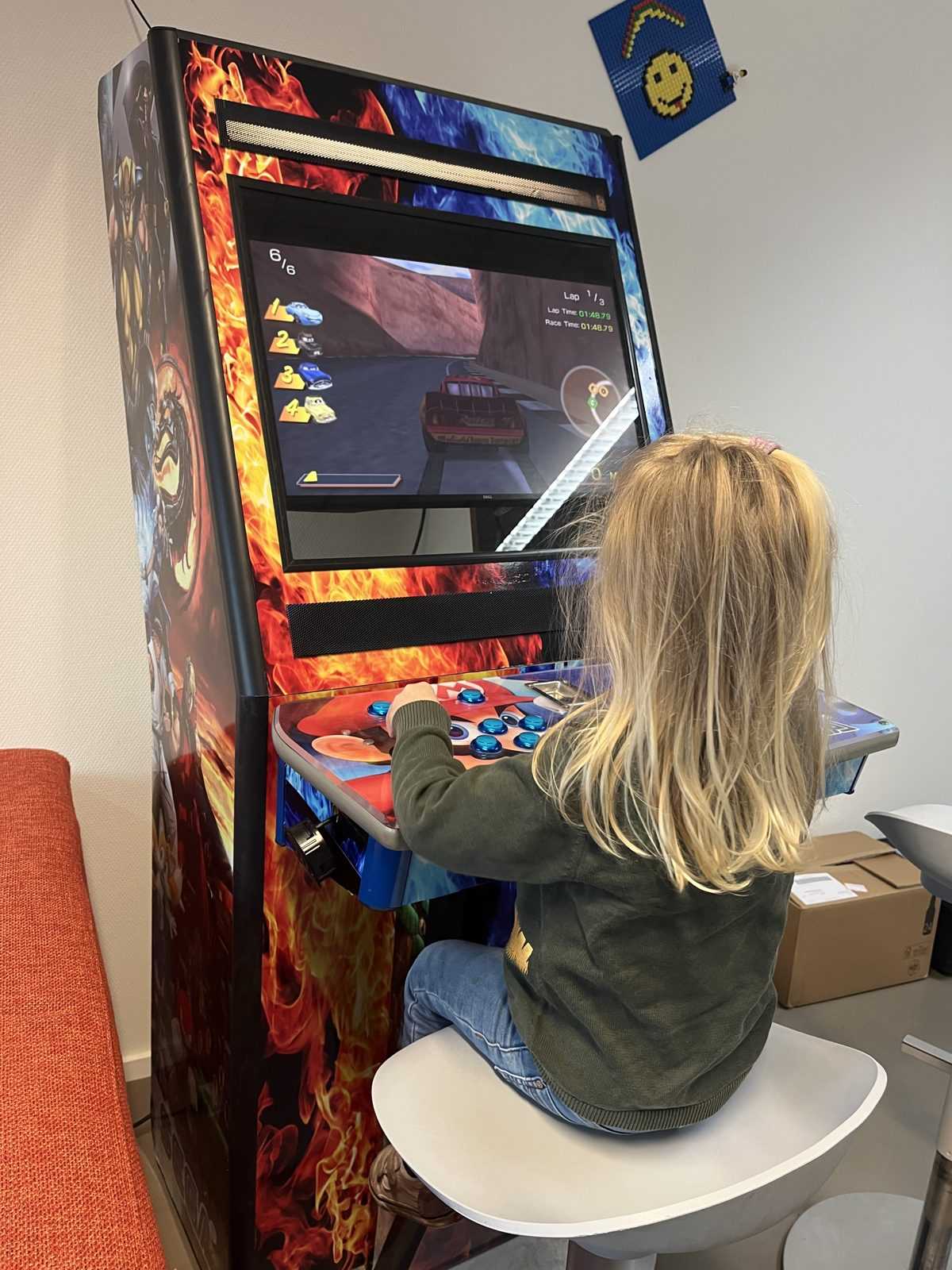
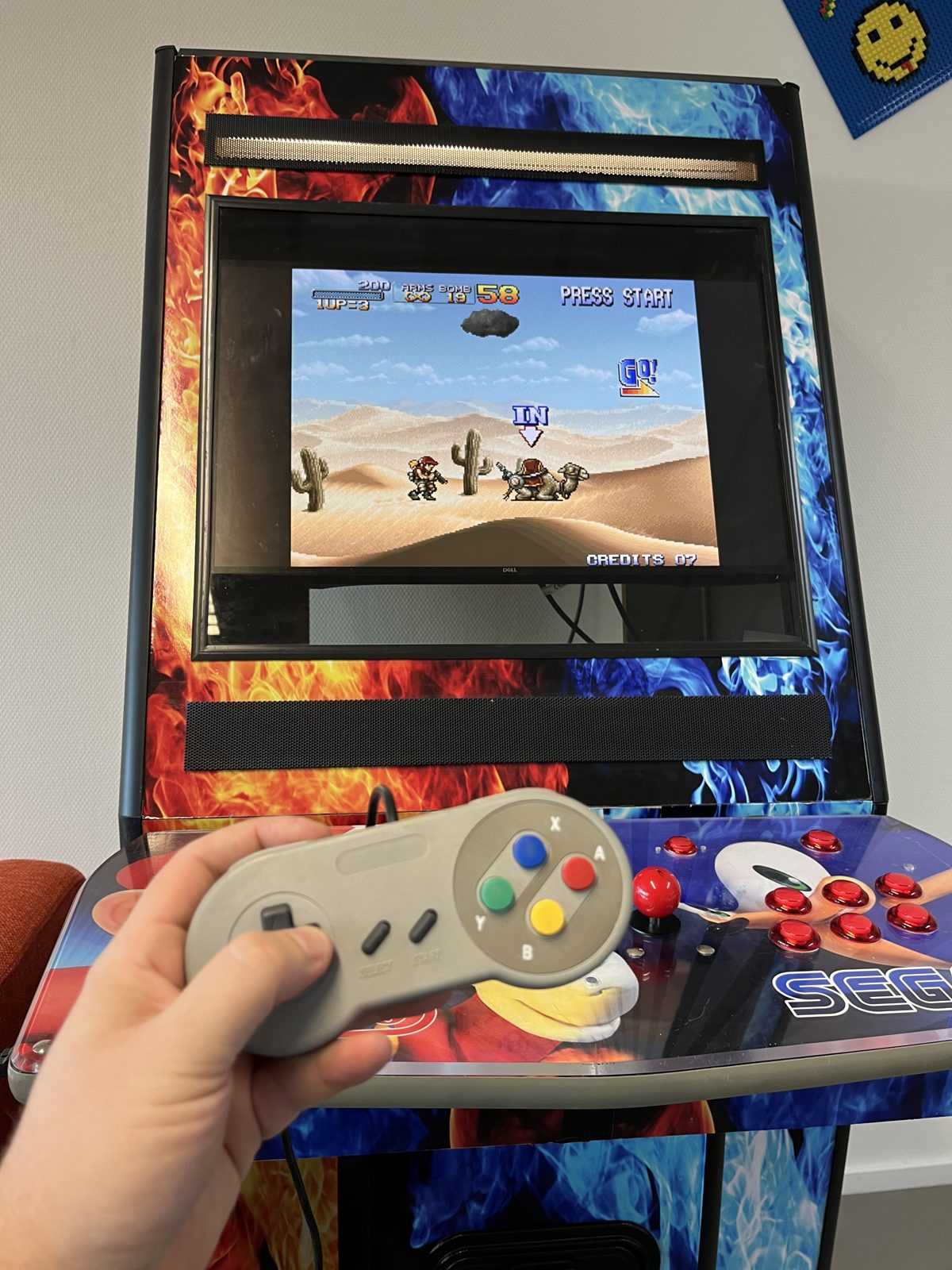
Not every game feels right on an arcade stick. Some games need a gamepad, so I connected extra controllers. A SNES controller works very well for the platformers.
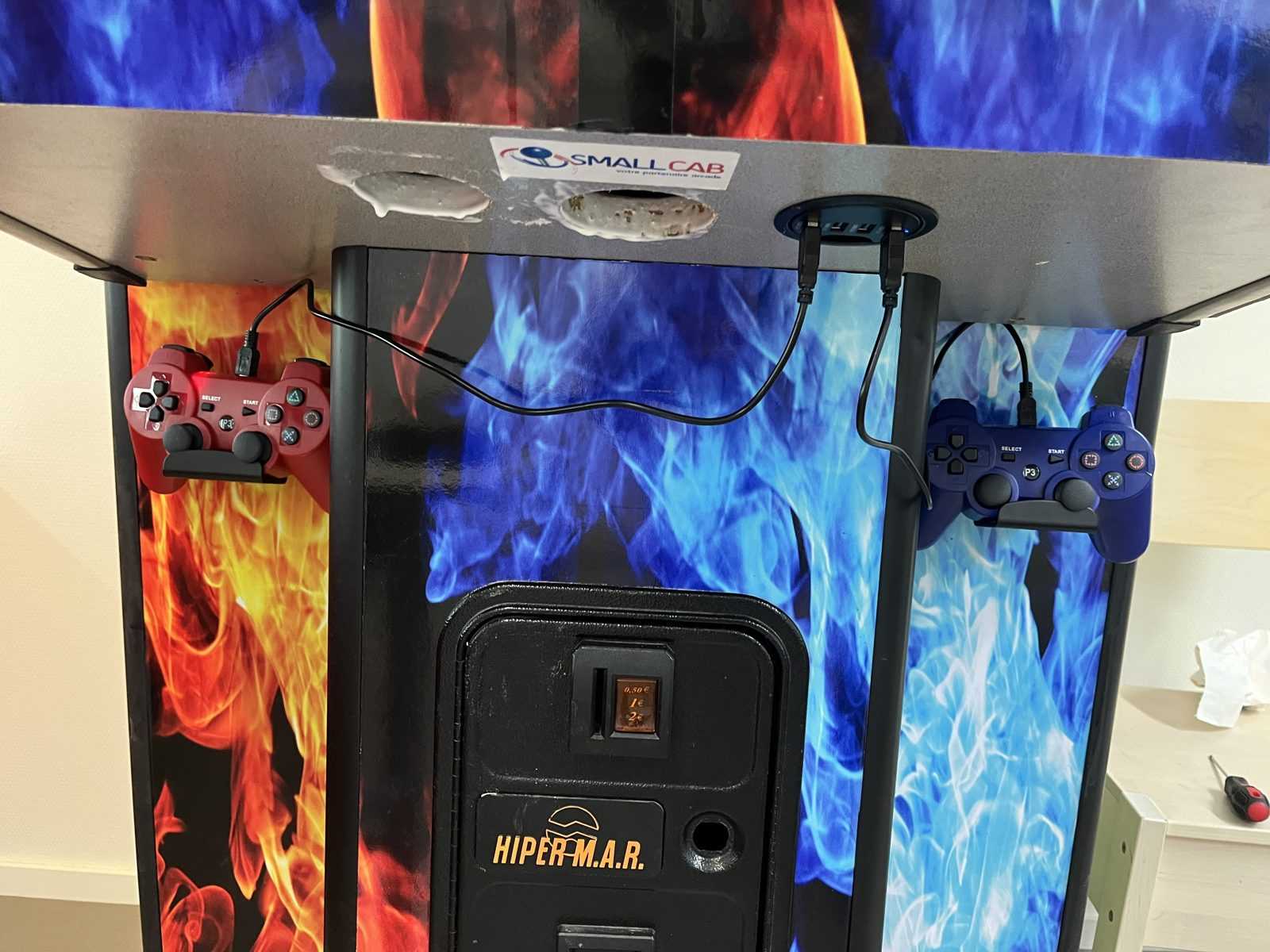
I also added USB ports under the control panel, with two PlayStation controllers that hang on hooks.
Autumn 2024: the pink box, new buttons and Pandory
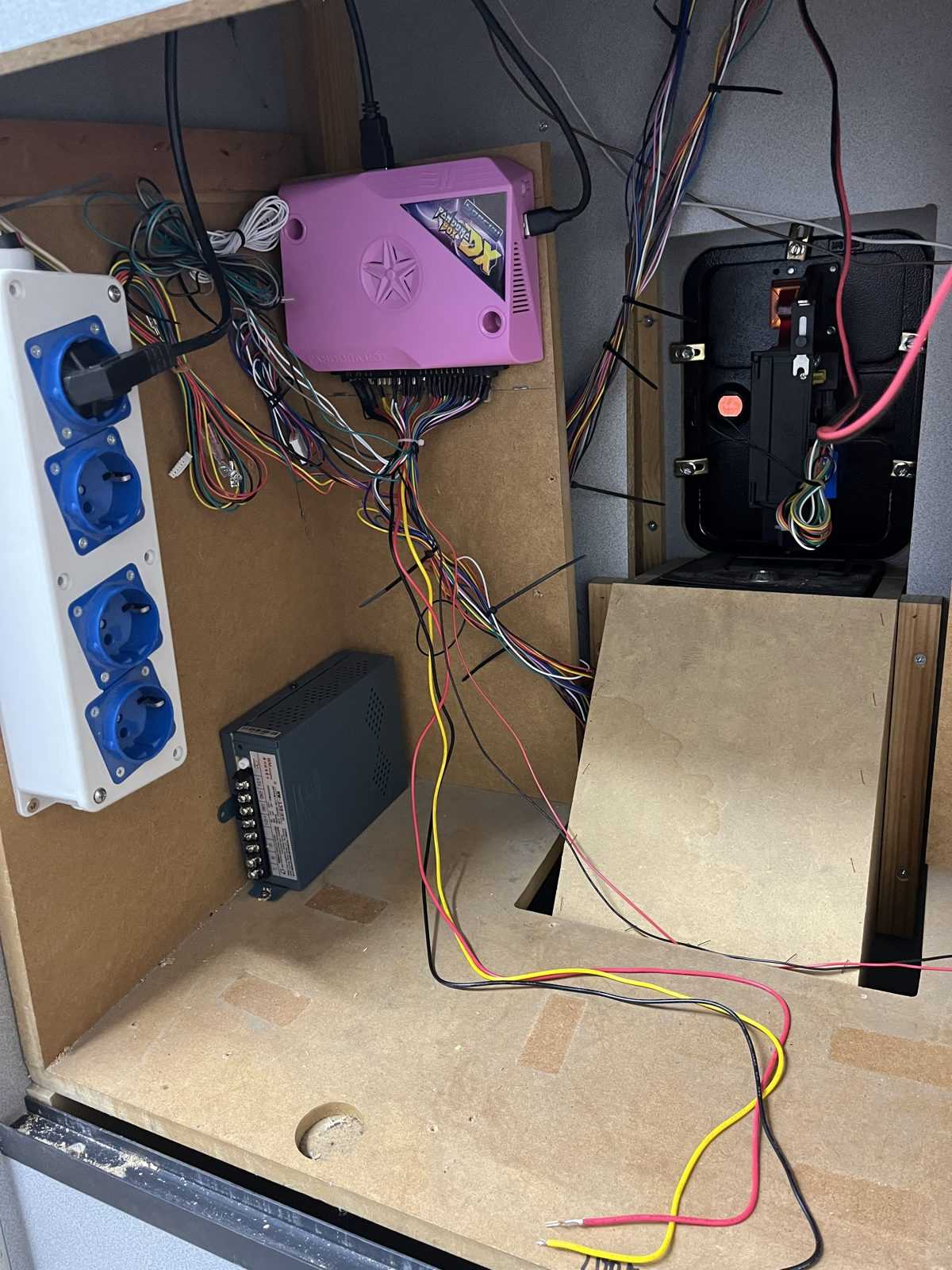
A few weeks later a pink Pandora’s Box replaced the green one. It has a separate power supply in the bottom of the cabinet.
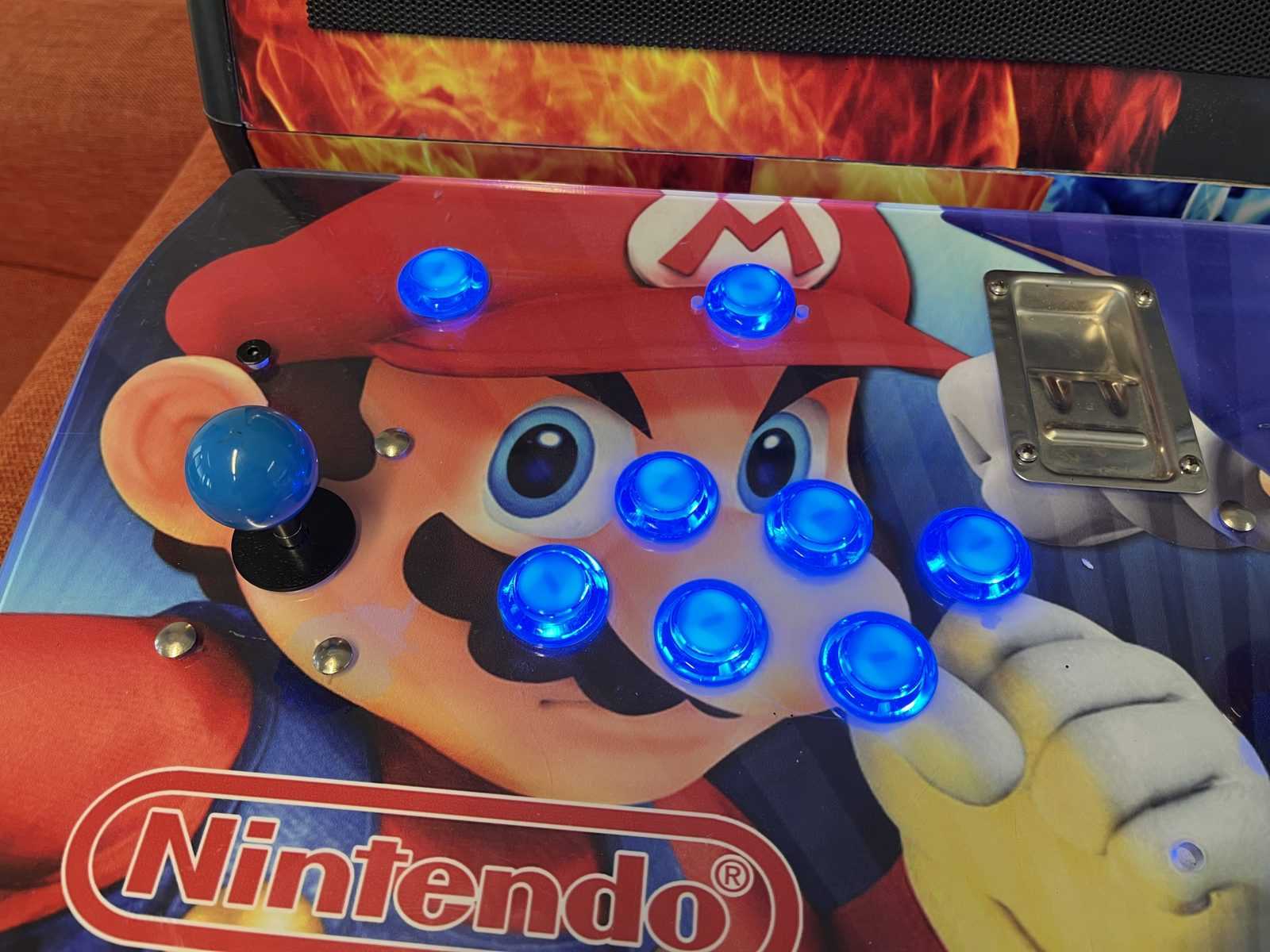
The control panel also got new buttons. Player one got blue LED buttons and player two got red ones.
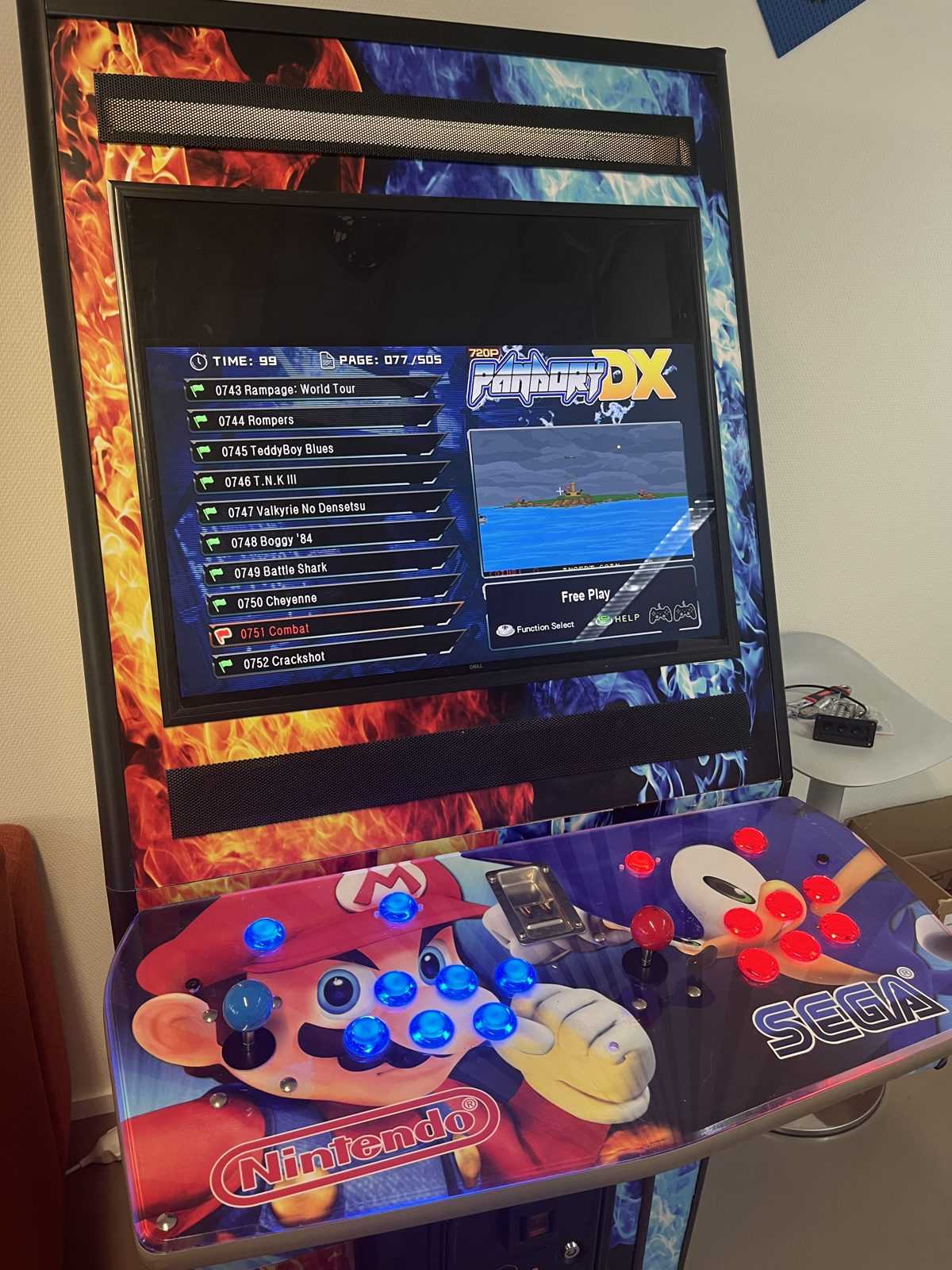
I updated the pink box with Pandory, custom software for these boxes. It replaces the stock menu with the Pandory DX menu.
2025: the CRT dream
I always wanted a real CRT in the cabinet again. A 29” tube fills the frame and gives the games their original look. So I tried several CRT screens. None of them worked out. Some screens were broken. Others did not have a usable (VGA) input, or did not fit in the cabinet at all.
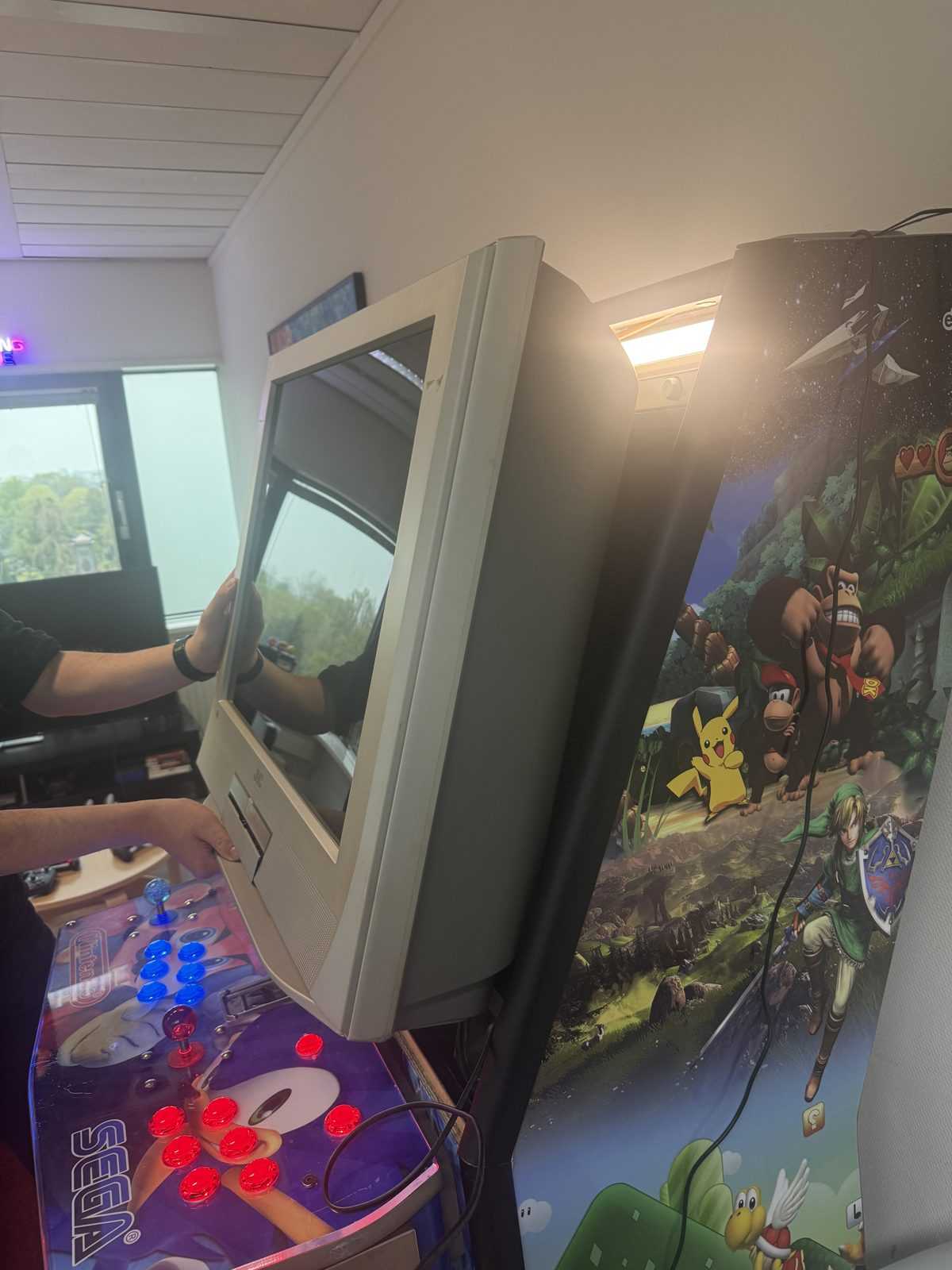
In the end I gave up. The cabinet now has an LCD screen that fits well, with a black passe-partout (mat) around it. It does not look like a tube, but it looks clean and it works every time.
Better sound
The audio got an upgrade too. An amplifier now powers the speakers in the cabinet.
2026: my own game, Señor Code
The latest addition is a game that I made myself. Señor Code is a SNES platformer in the style of Mario. You play a man with a sombrero, a moustache and glasses, and you collect chiles. It is my first vibe-coded game: I described what I wanted to an AI and kept going until it played well. It feels really good to see your own game on your own arcade cabinet.
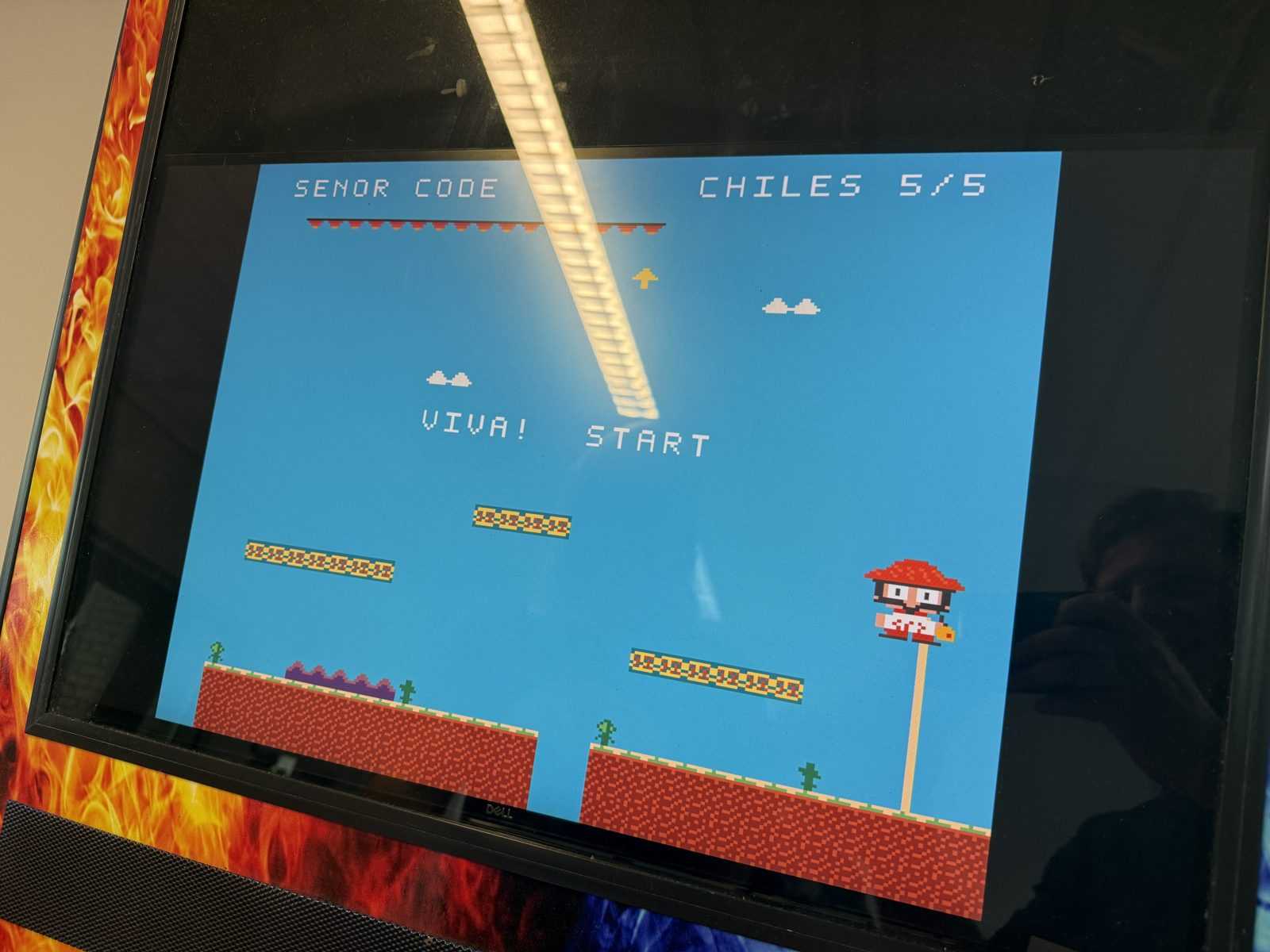
Thirteen years after the first build, the cabinet is still going strong. I am curious what the next update will bring.